Pipe(line)Dreams: slideshow image 1
Pipe(line)Dreams: slideshow image 2
Pipe(line)Dreams: slideshow image 3
Pipe(line)Dreams: slideshow image 4
Pipe(line)Dreams: slideshow image 5

Two steps forward, one step back

The Extractive Industries Transparency Initiative (EITI) adopted new standards intended to increase transparency in the oil, gas and mining industries. The new rules were announced in Sydney ahead of the EITI board meeting. Ironically, several of the major oil companies who sit on the EITI board are part of a U.S. lawsuit that seeks to weaken transparency legislation in the U.S. Inter Press Service describes the “disconnect”:

On the one hand, several of the world’s largest oil companies – including ExxonMobil, Shell and Chevron – sit on the EITI board and are thus inferred to be in agreement with the newly revised transparency rules.

On the other hand, these companies are currently part of a lawsuit here attempting to dismantle Section 1504 of the Dodd-Frank Act, the legislation on which the new EITI standards are mostly closely based.

(more…)

Natural resources benefits for all?


The Africa Progress Report 2013 presented at the World Economic Forum on Africa created quite a media buzz. With its focus on natural resources — the extractive industries in particular — the report describes a continent “on the edge of enormous opportunity”:

Over the past decade, Africa’s economies have been riding the crest of a global commodity wave. Extractive industries have emerged as a powerful engine of economic growth. Surging demand for natural resources in China and other emerging markets has pushed export prices to new highs – and the boom shows no sign of abating. Africa’s petroleum, gas and mineral resources have become a powerful magnet for foreign investment. With new exploration revealing much larger reserves than were previously known, Africa stands to reap a natural resource windfall.

The challenge facing the region’s governments is to convert the temporary windfall into a permanent breakthrough in human development. Effective and equitable stewardship of Africa’s natural resource wealth could transform the region.

The report, Equity in Extractives, and more, are available on the Africa Progress Panel website.

Corexit and a never-ending supply of oil


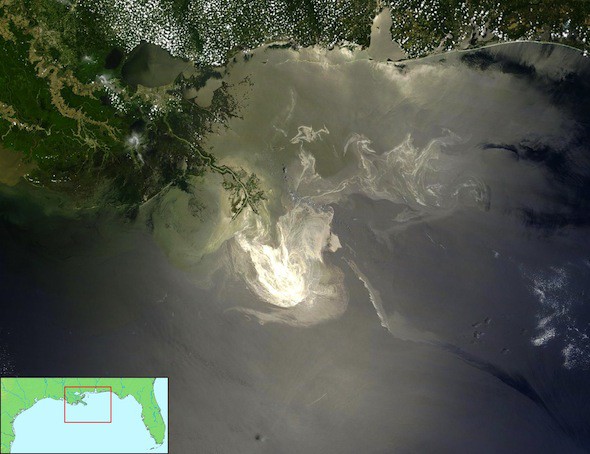
Al Jazeera English  is one of the few news organizations in the U.S. keeping the Deepwater Horizon story alive. While others have forgotten the disaster, Al Jazeera has broadcast a number of stories on the ongoing environmental problems in the Gulf of Mexico. The mess that oil made recently aired on Inside Story Americas.

The Huffington Post also featured an article by David Kirby on the Corexit scandal, Corexit, Oil Dispersant Used By BP, Is Destroying Gulf Marine Life, Scientists Say.

BP’s negligence prior to the Deepwater Horizon has been reported extensively. But had this accident occurred on land it could have been contained much more quickly.  Today oil companies are after oil that’s harder and more dangerous to drill. Disaster response technology has not kept up and one can only when the next disaster will occur.  A new article published in The Atlantic and Mother Jones, What if we never run out of oil?, describes the latest efforts to get at frozen gas miles under the ocean surface. A miracle — and a nightmare — writes author, Charles Mann. Indeed.


    Oil...A Pipeline to Prosperity?

    Oil…A Pipeline to Prosperity?

    I have produced a short film for PBS/Frontline World to mark the 10th anniversary of World Bank engagement in the Chad-Cameroon Oil Development and Pipeline Project. The film, “Cameroon: Pipeline to Prosperity?” revisits the story of the “model” oil for development project. Ten years ago the oil companies and the World Bank promised that this project would break the resource curse and prove to the world that oil could be a force for good…

    Continue Reading

    Increase your website traffic with Attracta.com