Oil vs. fishing in Ghana — the conflicts continue
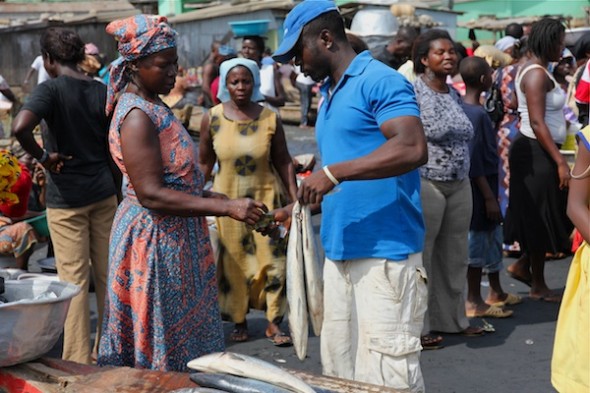
Takoradi fishing port. Photo by Christiane Badgley
It has been ages since I’ve posted anything here (more on that below), but it seems that nothing much has changed — at least not for the fishing communities of Western Ghana. I first reported on conflicts between fishermen and Ghana’s new oil industry more than three years ago. Since then, oil exploration and drilling have increased, and the situation for fishermen has deteriorated. In the last few months three reporters have contacted me to talk about conflicts between fishing and oil.
Tullow’s tax disclosures torpedo Big Oil’s campaign for secrecy
Tullow Oil, Ghana. Photo by Christiane Badgley
From Global Witness:
March 24, 2014
The UK company Tullow Oil today became the world’s first extractive firm to publish details of its revenue payments to governments broken down by each project the company operates worldwide. The disclosures, released today in Tullow’s annual report, show the taxes, royalties, licence fees and other public revenues generated by the company’s operations across 21 countries – 14 of which are in sub-Saharan Africa – for the years 2012 and 2013.
Tullow’s voluntary disclosures are being released in advance of a new EU law, due to come into force in the UK in 2015, that will require EU oil, mining and logging companies to publish their payments to governments on a project-by-project basis. These detailed disclosures will enable citizens in economically poor but resource-rich regions to monitor public revenues worth hundreds of billions of dollars and hold governments to account for how the money is used.
What will it take for Ghana to investigate the surge in whale deaths?
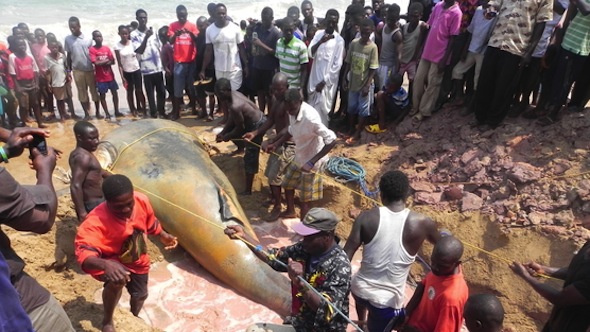
Photo: Friends of the Nation
An unusual number of dead marine mammals have been washing ashore in Western Ghana since 2009. Friends of the Nation and other local groups have reported the beached whales to the government and the local EPA office. The government has not investigated and the cause of the deaths remains a mystery. Locals point out that dead whales started appearing in 2009, coinciding with offshore drilling. Many suspect a connection between the whale deaths and Ghana’s oil industry, but without any studies people can only speculate.
Two years ago I wrote about Ghana’s oil industry for the Center for Public Integrity and included information on whale deaths:
Dead whales
In Sekondi-Takoradi, Ghana’s “Oil City,” activists from Friends of the Nation work with the communities closest to offshore drilling operations. In two years of monitoring on behalf of local residents, the group’s Kyei Yamoah, has noted an increase in whale deaths. “A whale washed ashore in October, bringing the total number of dead whales on our beaches since late 2009 to eight,” Yamoah said.
Marine mammals continue to wash ashore in Ghana’s Western Region
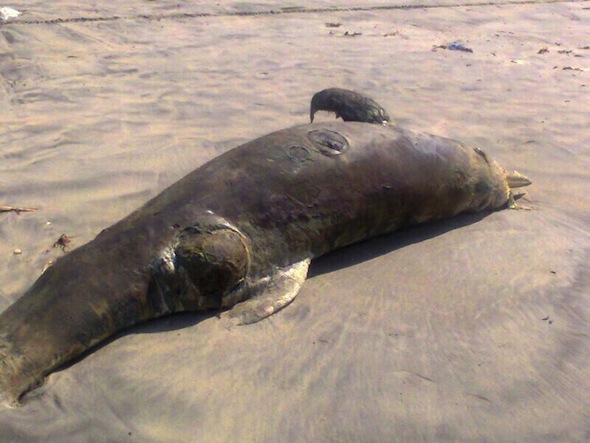
October 21st, 2013: the 19th marine mammal to wash ashore in Ghana’s Western Region since 2009. Photo: Friends of the Nation
From Friends of the Nation, Takoradi, October 23, 2013
The washing ashore of marine mammals in Ghana is still not stopping. On October 20 and 21, 2013, two more mammals were found dead at the coast of Asanta in the Ellembelle District in the Western Region. These carcasses present the 18th and 19th incidents respectively within the last four years. Citizens in the coastal areas are trying to correlate these unfortunate events to the offshore oil and gas, since the production started around the same period (2009). Two dead mammals after each other within just two days caused a shock amongst locals. People in the coastal community are asking for answers.
2013…Smile!
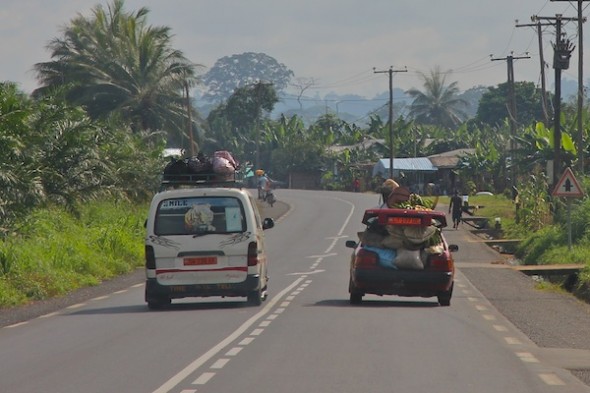
Traveling in the SW region of Cameroon. Photo by Christiane Badgley
Happy New Year and best wishes to all my friends, colleagues and readers. May we all have good news to report in 2013!
Offshore drilling, noise and whale deaths: is there a connection?
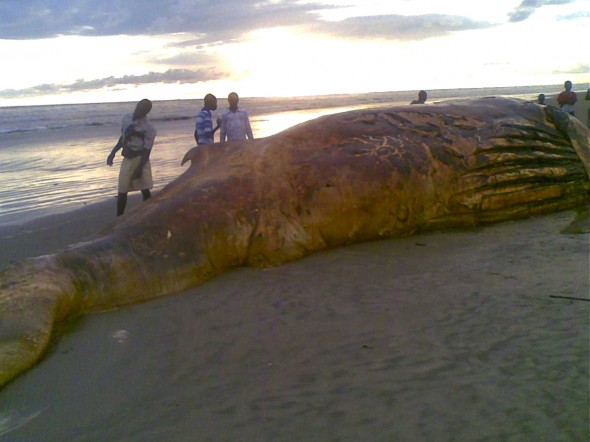
A dead whale in Ghana’s Western Region. Photo: Friends of the Nation
While working in Ghana last year, I learned that an unusually high number of dead whales had washed ashore since the start of oil drilling. I talked to several local environmentalists who feared the deaths were connected to the country’s oil industry but had no resources to investigate. Without offering any details or study results, the Ghana EPA declared the whale deaths were unrelated to the oil industry.
Although there had been no significant oil spills in Ghana, another form of pollution, which may have played a role in the whale deaths, was ongoing yet invisible: Noise pollution. Shipping and drilling are two known causes of significant underwater noise. Noise pollution — especially when it’s below the ocean surface — doesn’t get much attention. But as a recent article in the New York Times points out, the world’s oceans are increasingly noisy and the impact on marine life, mammals in particular, may be devastating:
Following Ghana election news with Pen + Bytes

Pen + Bytes (PPB), the African ICT journalism training organization, has put together a great Ghana Election 2012 website.
The project, a collaboration between PPB, Star Ghana and the African Elections Project, is aggregating news (print, online, radio and television), posting reports and hosting an election incidence map.
The Blogging Ghana group also launched the Ghana Decides project with live updates. Star Ghana and several international agencies are supporting this work.
Watching the election from afar, it seems that Ghana has a few lessons to offer the U.S. Although people were reported to be lining up before dawn to vote and faced long waits to vote in many places, Ghana’s election day is a public holiday, significantly increasing voting opportunities. We’re still waiting for Election Day to be National Holiday.
New resource…and a bit of self-promotion
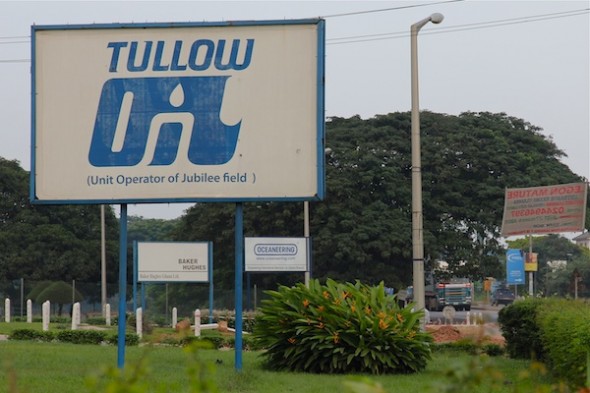
Takoradi, Ghana. Photo by Christiane Badgley
If you’re a reporter, student or activist looking for sources of information on the oil industry or wondering how you can work with data available from the World Bank and other organizations, there’s a new handbook out that you will certainly appreciate. It’s called, Exploring Oil Data, A Reporter’s Handbook, and you can download it from the Open Oil website. As someone who spends a lot of time sifting through (and trying to get my head around) data and searching dozens of websites for information that no oil companies willingly share, I was excited to find so many sources gathered together in one location. I was also thrilled to see my blog here at Pipe(line) Dreams listed as one of the “Top Ten Blogs”.
The resource curse: money and beyond
It’s time to connect the dots and add environmental impacts into the equation.
The resource curse — and how to break it — has been getting some much-needed media attention lately. Unfortunately, however, we’re not getting the whole story.
Ghana’s oil worries?
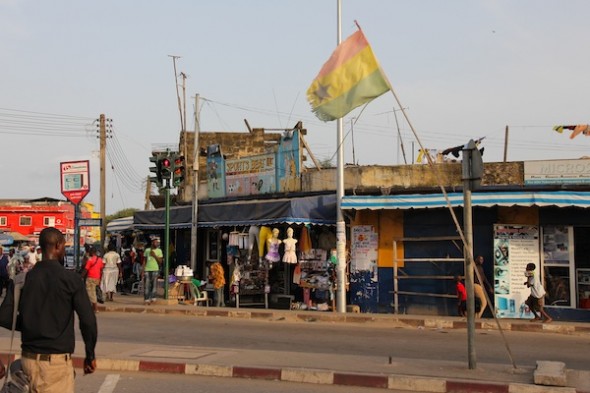
Takoradi waiting for the oil boom. Photo by Christiane Badgley
I have a decent internet connection this morning, so I’ll take advantage of that to post some of the back and forth between Ghanaian think tank, IMANI, and the Ghana National Petroleum Corporation (GNPC). IMANI has recently published some interesting articles on the Jubilee field’s underperformance. In contrast to the excited tone of most of the business news about the country’s oil industry, the IMANI articles raise serious questions about the industry’s costs and prospects.
Worrying Developments in Ghana’s Oil Sector discusses production levels that are hovering around 60,000 b.p.d. The projected 120,000 barrel daily output has never been met and at this time, it is unclear when production will reach this level. IMANI has questioned both the speed of the Jubilee field development and the original production projections.
Yaounde landing…
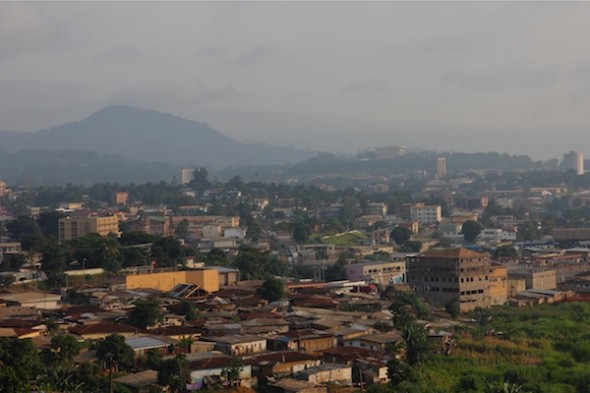
Early morning haze over Yaounde. July 2012. Photo by Christiane Badgley
I haven’t had a chance to post anything for a few weeks. I’ve just arrived in Yaounde, Cameroon, and hope to have more time to get information up in the coming days. I’m starting some new work and will look forward to writing about it.
In the meantime, I want to provide links to a few articles up at Ghana Oil Watch. As the months go by, the Jubilee Field projected 120,000 b.p.d. output level is looking increasingly like wishful thinking. It has been hard to get clear information on why — exactly — production is so low. Tullow and its partners have repeatedly cited technical issues as the cause, yet now that those issues are supposedly resolved, why haven’t production levels increased?
Oil and fishing, again
Fish vs. Oil Part 1 from Christiane Badgley on Vimeo.
I have been busy the past few weeks and haven’t had much time for posting…But today I have to take out a few minutes to repost an article from the Ghana News Agency (via Ghana Oil Watch).
It has been more than a year since I wrote about the difficult relationship between Ghana’s fishing communities and the oil industry. It seems that nothing much has changed since. The fishing communities are still waiting for an impact assessment. Fishermen say the oil industry is impacting their activities, but without any studies, they have nowhere to go with their grievances.
Continue reading . . .
Dirty oil, dirty money…time to rethink our drilling madness?
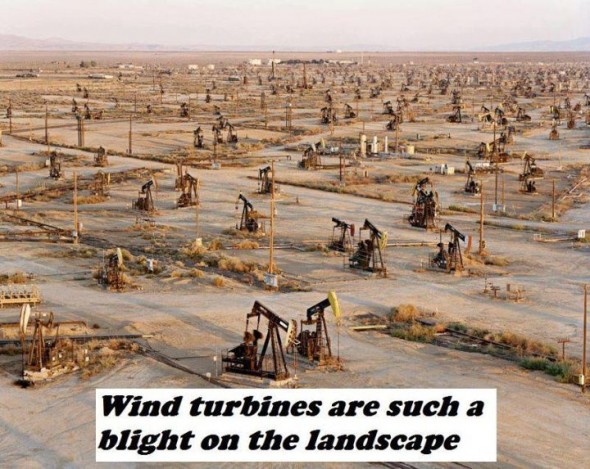
From DemocraticUnderground.com
I’ve not been writing much lately — too busy with other work. But a number of articles and reports have caught my attention.
Of course, mainstream reporting on oil is generally all good news. It’s the second golden age of oil! Drill, drill, drill. Oil and gas prices will drop! We will become energy independent! Oil and gas will transform economies! Investors will see great returns!
It’s all so wonderful that you can almost forget about climate change and corruption and the fact that we’re really not seeing oil money transform economies in a positive way. Not yet, at least. Oil is bringing in money and raising GDP, but that hardly means life on the ground is getting any better for the average citizen. And, as recent reports from Ghana suggest, oil there is boosting inflation and putting downward pressure on the cedi — hardly a benefit for the people.
Ghana: gas, cash and jobs
IS LOCAL CONTENT A PIPEDREAM? from Channel Two Communications on Vimeo.
There’s been a flurry of excited news coming out of Ghana the past few weeks. Ghana’s growth rate hits 16%. Ghana signs the first $1 billion of its $3 billion loan agreement with China. An additional $6 billion Chinese loan is in the works. The $1.2 billion gas plant project will soon move into high gear. Vice President John Dramani Mahama says Ghana will rake in $1 billion from gas annually and that will allow Ghana to pay off the $3 billion loan ahead of schedule. He predicts the gas industry will create hundreds of thousands of jobs. (Check out Ghana Oil Watch for articles on all this and more.)
Wow! All sounds amazing, but is it too good to be true?
Total: Two gas leaks, two reactions
Jon Gambrell, Associated Press in Lagos, has reported that French oil company Total acknowledged on Saturday that one of its gas operations in the Niger Delta is leaking and that this “may have been going on for weeks.”
Gambrell writes, “Total’s Nigerian subsidiary hasn’t made any public statement about the leak since it likely began following an incident March 20, though the company has given near-daily updates about a similar leak at a plant off the United Kingdom in the North Sea.
Lloyd’s of London to Arctic would-be drillers: Slow down
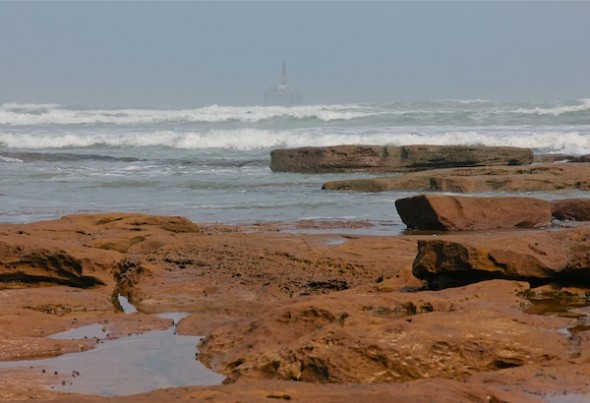
"Think carefully about the consequences" Photo by Christiane Badgley
The Guardian is reporting that Lloyd’s of London, the world’s largest insurance market, has voiced concern about proposed offshore Arctic drilling. The company says clean-up of any spill would present, “multiple obstacles, which together constitute a unique and hard-to-manage risk.”
Reading the article, several paragraphs jumped out because they could also be useful for policy makers in Africa, many of whom are jumping on the drilling bandwagon without having adequate safety and emergency response systems in place:
Richard Ward, Lloyd’s chief executive, urged companies not to “rush in [but instead to] step back and think carefully about the consequences of that action” before research was carried out and the right safety measures put in place….
Other than the direct release of pollutants… there are multiple ways in which ecosystems could be disturbed, such as the construction of pipelines and roads, noise pollution from offshore drilling, seismic survey activity or additional maritime traffic….
From one disaster to another
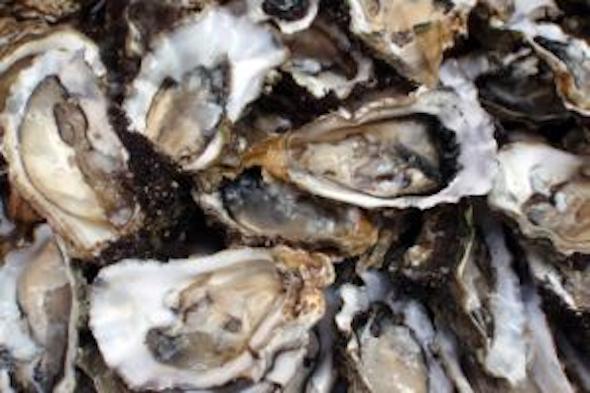
Gulf oysters: two years later, still sick
The two year anniversary of the Deepwater Horizon explosion is just a days away, and as Bryan Walsh from Time magazine puts it, the “oil spill seems to divide people into two categories: those who can’t forget, and those who refuse to remember. In the first camp are Gulf Coast residents and environmentalists who say the region still hasn’t recovered from the worst oil spill in U.S. history, and who are still waiting to be made whole—as BP once promised. In the second is much of the oil industry and many Republicans, who like to complain that offshore drilling has slowed under President Obama, yet seem to forget the multi-billion dollar damage that the oil spill left, and the months it took to repair the Macondo blowout.”
You can read more in his article, Nearly two years on, did the BP oil spill have to happen to BP?
And while we’re wondering about the inevitability of BP’s spill, Total’s North Sea gas leak appears to be much worse than originally reported:
Sitting on a powder keg of highly flammable natural gas and gas condensate, the French oil major’s rig could be one of the worst oil disasters in the North Sea. A gas cloud, made mostly of methane, has essentially enveloped the rig after attempts to shut a troubled production failed and caused a leak. If this cloud — which is growing by roughly 200,000 cubic meters a day — ignites, it could be catastrophic.
Clearly, the potential for human and environmental tragedy is the paramount concern here, much as it was with BP’s Gulf of Mexico disaster.
Cameroon quietly ups oil production
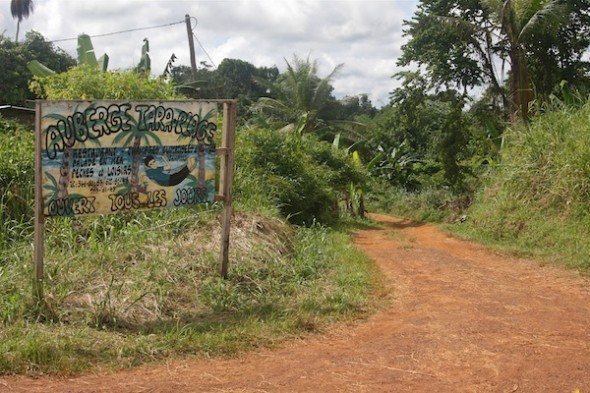
Kribi, Cameroon, where sleepy beach resorts will soon give way to a major port and gas plant. Photo by Christiane Badgley
Cameroon’s oil industry doesn’t get much international attention these days, but like its neighbors the country has seen growing offshore activity over the last few years. After years of declining output, the country’s production levels are once again on the rise.
The Scottish company, Bowleven, has been drilling in Cameroon for several years now and its hits and misses usually get some coverage in the business press. Kosmos Energy, Perenco, Shell, ExxonMobil and Noble Energy, among others, are also actively drilling in the country.
Although Cameroon’s oil production levels are close to those of Ghana, there’s no talk of transparent revenue management in Cameroon. The country recently had its EITI candidacy status renewed for another 18 months. It should be noted that the country was already “close to compliant” in 2010 and hasn’t made much progress since. According to EITI rules, “If Cameroon does not achieve Compliant status by 15 August 2013, it will be de-listed.”
Job woes and local content
The dearth of oil jobs in Ghana is back in the news again.
“Youth angry over elusive jobs in oil industry,” was the title of an article published in the Ghanaian press on March 12th.
The article cites Ebow Haizel-Ferguson from Sigma-Base Technical Services, who urges the rapid development of “ancillary industries.” I interviewed Haizel-Ferguson for “Ghana: Will oil mean jobs?” a short video I produced for the Pulitzer Center .
Oil brings in huge amounts of money, of course, and along with that comes expectations of many, well-paid jobs. The problem is that the industry – at least as it exists in Ghana now – doesn’t generate much work.
“Good” oil companies, “bad” oil companies
Tullow Oil from Ghana to Uganda. Photo by Christiane Badgley
Tullow Oil has recently completed a controversial $2.9 billion sale of parts of its Ugandan oil stakes. Tullow’s deal with Total (France) and CNOOC (China), which had been mired in disputes with the Ugandan government for more than a year, was finalized despite a parliamentary resolution to suspend all oil contracts until laws and institutions are in place to fight corruption.
Uganda’s oil reserves appear to be significant, and there are indications that the region could be another oil bonanza. But at the moment, fears of corruption are dampening the mood. According to a recent article from the Associated Press Uganda stands to earn some $2 billion per year for the next 35 years, but:
“All signs are that Uganda will be the latest nation to fall victim to the ‘oil curse’ — cheated of its financial benefits by a corrupt government and left with extensive environmental damage,” said Uganda’s Association of Professional Environmentalists.
Critics are already complaining that more than $300,000 paid in signature bonuses on oil contracts already have gone missing. Legislators have accused the prime minister and two Cabinet ministers of taking millions of dollars in bribes from Tullow — charges Tullow denies.
The controversy surrounding Tullow’s operations in Uganda doesn’t fit with the image of Tullow Oil in Ghana.
Key political risks in the Gulf of Guinea
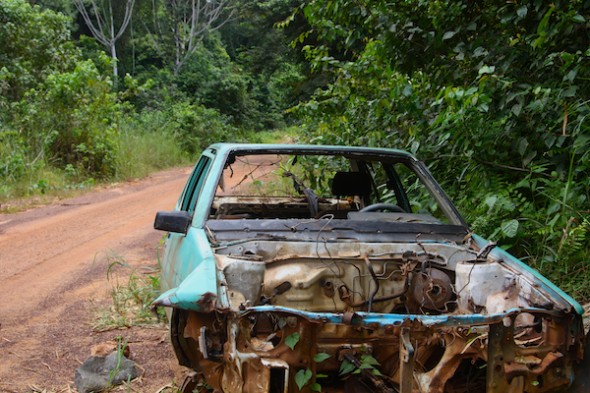
The road ahead... Photo: Christiane Badgley
Reuters has issued its annual report on “political risks” in the Gulf of Guinea. The report has little to do with how things are going for the people who live in the region — the focus is on political uncertainty that may impact investment. Nonetheless, it’s a useful rundown of the main industries and sources of instability across the region.
Piracy has been mentioned in this report for at least three years, but it’s moving higher up on the risk list. This year, the U.S. military presence also appears on the list. Although it is cited as a response to the lack of offshore security, an increased military presence could easily exacerbate instability in the region.
Will Ghana’s Marine Pollution Bill become law this year?
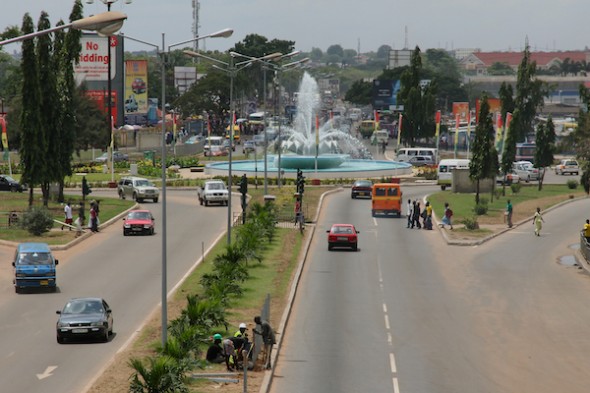
Accra. Photo: Christiane Badgley
I’m happy to see that Ghana’s Marine Pollution Bill is finally on the way to becoming law. I am speaking a bit optimistically here — the bill just received its first reading in Parliament a few days ago — but why not? As I’ve written at iwatch news, the pressure has been on the government to get pollution legislation passed since November’s “mystery” oil spill. Mystery in quotation marks because there is still no official word on what actually happened.
Libya’s oil today: resource curse part two?
Photo: ThinkAfricaPress
News today from Libya and Ghana.
ThinkAfricaPress has published, “Prospects for Libyan Oil: Learning from Iraq”, an interesting article on the future of the Libyan oil industry. Here’s an excerpt:
Increasing the transparency of dealings regarding the ‘black gold’ that lies beneath Libya will be essential to ensuring balanced growth and employment for the Libyan people, but this will prove no mean feat. Given that pressure is unlikely to come from external governments, the incentives and pushes for reform will have to be generated domestically through civil society and a free media.
When getting rid of Gaddafi was so important for U.S./NATO, there was much talk about his abuse of the country’s oil wealth. Now that he’s out of the picture, it’s like, “who cares?” As long as the oil flows…
Ghana’s fishing communities fear oil spills…
…And rightly so.
Yesterday I wrote that Ghana has been producing oil from its offshore Jubilee field since December 2010, yet still lacks monitoring vessels, equipment and personnel.
Something else that’s missing: funds to compensate fishing communities in the event of a spill.
This video recounts the fears of the residents of Abuesi, a small fishing community near Sekondi-Takorad (a.k.a. “Oil City”). Travel up and down the coast, and you’ll hear the same fears echoed again and again.
What will happen when a village that is entirely dependent on its fishing operations for its survival is shut down by an oil spill?